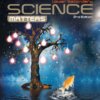
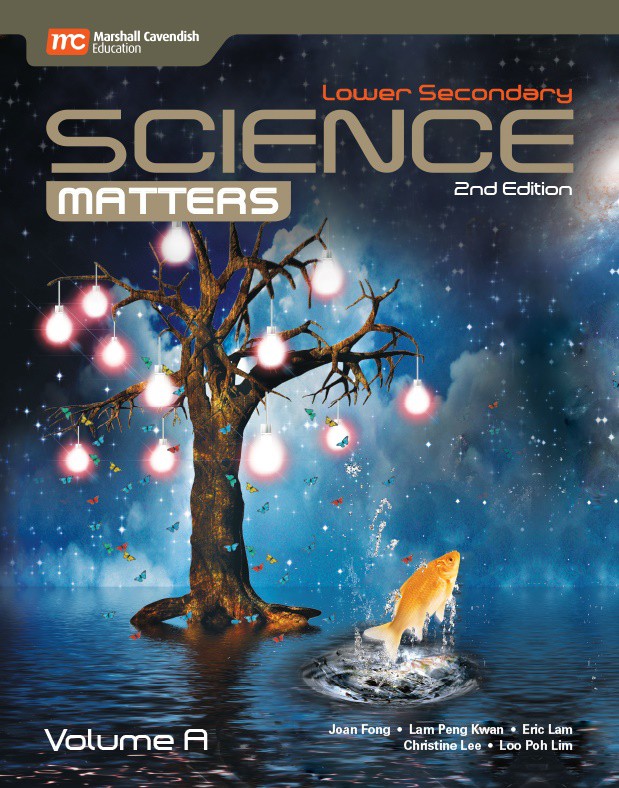
Lower Secondary Science Matters Textbook Volume A (2nd Edition)
R514.95 Inclusive of VAT
Designed to meet the needs of the 21st Century learner, the textbook helps students discover scientific knowledge by using extensive real-life contexts. The use of purposeful visuals helps to enhance the students’ learning experience. The book also provides many opportunities for students to develop scientific literacy through a strong foundation in Science.
In stock
- Helps students relate to scientific concepts using real-life context.
- Engages students through visuals – Information is communicated clearly and concisely in this manner. In addition, fascinating pictures are used to create excitement among students and make learning more enjoyable.
- Encourages critical thinking and challenges students to think about concepts at a broader level as well as understand the ethical issues surrounding science and technology.
CONTENTS
1. The Scientific Endeavour
1.1 What is Science?
1.2 How is Scientific Knowledge Derived? – Attitudes in Science
1.3 How is Scientific Knowledge Derived? – The Scientific Method
1.4 How does Science and Technology Affect our Lives?
1.5 Safety Practices during Scientific Investigations
2 Exploring Diversity of Matter by its Physical Properties
2.1 Physical Properties of Matter
2.2 Density
3 Exploring Diversity of Matter by its Chemical Composition
3.1 Chemical Composition of Matter
3.2 What are Elements?
3.3 What are Compounds?
3.4 What are Mixtures?
4 Exploring Diversity of Matter Using Separation Techniques
4.1 Separating Mixtures
4.2 Obtaining Drinking Water from Non-potable Water
5 Understanding Diversity of Organisms
5.1 The Variety of Life
5.2 The Importance of Biodiversity
5.3 Classifying and Identifying Organisms Using Dichotomous Keys
6 Model of Cells – The Basic Units of Life
6.1 What are Cells?
6.2 What is Inside a Typical Cell?
6.3 Forming a Multicellular Organism
6.4 Division of Labour
7 Model of Matter – The Particulate Nature of Matter
7.1 Using the Particulate Nature of Matter as a Model
7.2 Models of States of Matter
7.3 Models of Expansion and Contraction
7.4 Models of Changes in State
8 Model of Matter – Atoms and Molecules
8.1 The Atom
8.2 Using Models to Represent Atoms
8.3 Using a Model to Represent the Structure of an Atom
8.4 The Molecule
9 Ray Model of Light
9.1 What is Light?
9.2 Reflection
9.3 Refraction
9.4 Dispersion of Light
9.5 Colours